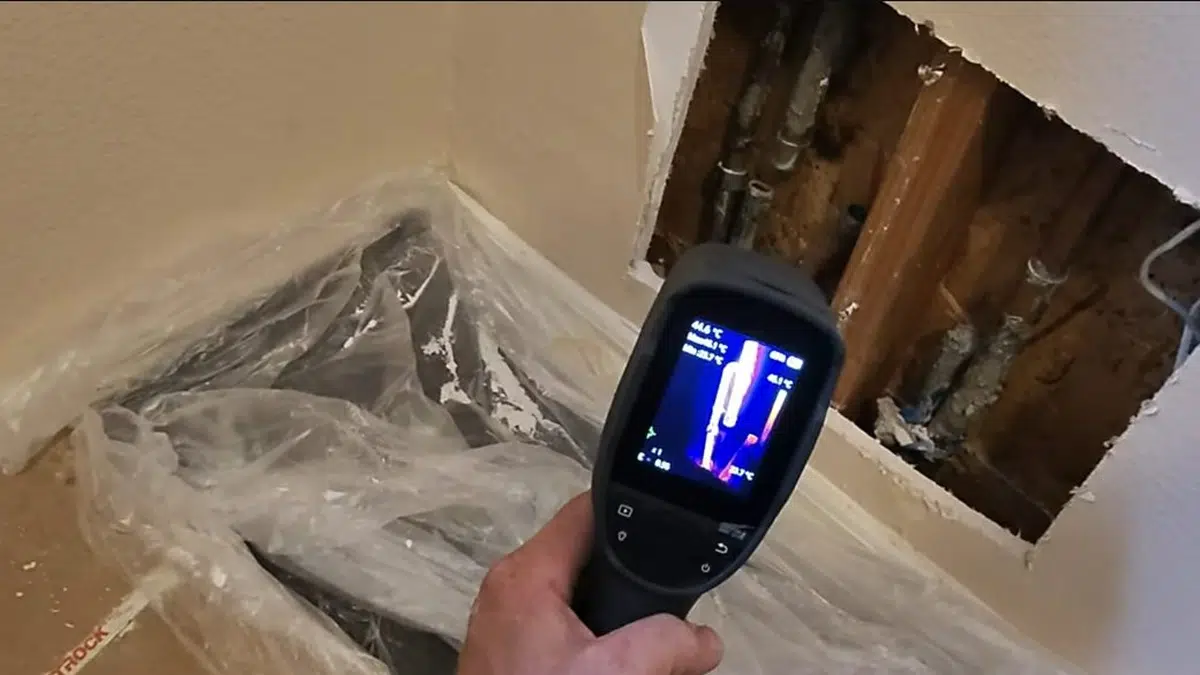
Why central OC homes are particularly susceptible to slab leaks
Central OC's 1960s and 1970s housing boom produced tens of thousands of homes built on concrete slab foundations with copper supply lines running through or beneath the concrete. This construction method was standard practice for Southern California's warm, non-frost climate, which eliminated the basement and crawl space requirements common in other regions. Fifty to sixty-five years later, those embedded copper lines are aging through exactly the failure mode that engineers expected: mineral pitting from long-term exposure to the region's moderately hard water supply.
The hard water connection is important. In central OC, most utilities deliver water with hardness ranging from 150 to 350 parts per million, depending on the source blend (groundwater vs. Colorado River imports via MWD). At these hardness levels, the calcium and magnesium minerals in the water react with the copper surface inside hot water pipes, creating microscopic pitting over decades of constant exposure. The hot water line fails first because elevated temperature accelerates the chemical reaction. Cold water lines in the same home may still be serviceable when the hot water line has already developed its first pinhole.
Seven signs of a slab leak in your central OC home
1. Unexplained increase in your water bill
A water bill that has jumped by $30 to $150 per month without any change in household use is one of the most reliable early indicators of a slab leak. A small pinhole under normal supply pressure loses 500 to 2,000 gallons per day. Golden State Water and other central OC utilities bill by the hundred cubic feet (CCF), and an unexpected jump of 1 to 3 CCF or more per billing cycle warrants a leak check before it is attributed to other causes.
2. Warm or hot spot on the floor
A warm area on a tile, vinyl, or wood floor, particularly in a location not near a heat source, is a strong indicator of a hot water slab leak. The leaking hot water heats the soil beneath the slab, which conducts heat up through the concrete to the floor surface. Warm floor spots from slab leaks are often detectable by walking across the floor in bare feet before any other signs appear.
3. Sound of running water with all fixtures off
Standing in a quiet room and hearing the faint sound of water flowing through a pipe when you know all taps, appliances, and toilets are off is a clear indication of an active leak somewhere in the system. The sound may be more audible near certain walls or at certain floor locations. If you press your ear to the floor at the suspected warm spot, you may be able to hear the water escaping from the pinhole.
4. The meter test confirms active water loss
The meter test involves turning off all water use, including appliances and irrigation timers, and checking whether the low-flow indicator on the water meter at the curb is still moving. A spinning indicator with all use stopped confirms active water loss. Closing the house main shutoff confirms whether the loss is inside the property boundary. This is the most definitive non-invasive field test for confirming an active leak before calling for detection.
5. Cracks in floor tile or concrete
A slab leak that has been active long enough to saturate the soil beneath the foundation can cause differential settlement and produce cracks in tile or in the slab surface itself. Floor cracks that develop progressively, or tile grout that cracks and separates at a specific location, can indicate subsurface moisture movement from a long-term slow leak beneath that area.
6. Mold or mildew odor at floor level
A persistent musty smell at floor level, particularly near walls where moisture from a slab leak can wick up through the concrete and into the wall base, may indicate a slab leak that has been active long enough to support mold growth. Floor-level mold in a central OC home without visible surface water intrusion is a classic presentation of a slow, long-term slab leak.
7. Low water pressure throughout the home
A slab leak in the main supply trunk loses water continuously, reducing the pressure available at fixtures throughout the home. If pressure has gradually decreased and no supply line valves have been adjusted, a slab leak (or a galvanized supply issue in older homes) should be among the first causes investigated.
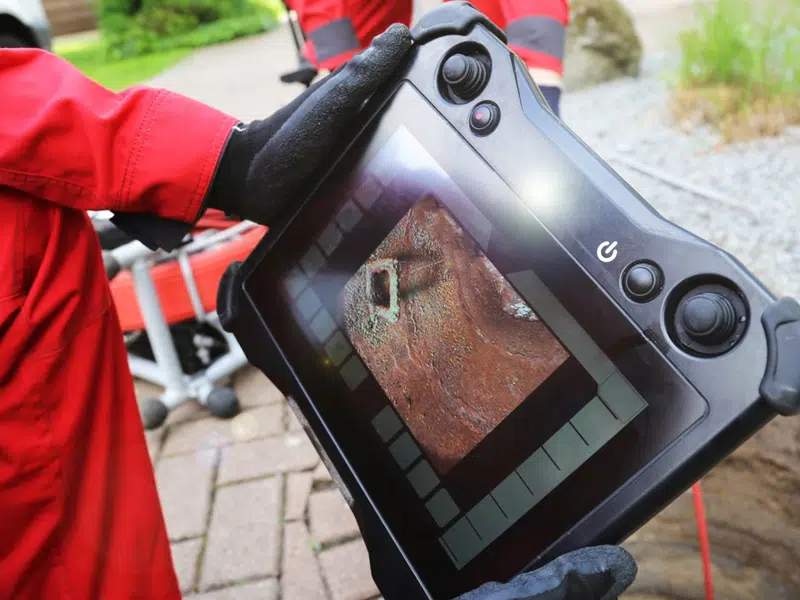
Related plumbing resources
Services: Slab Leak Detection & Repair, Leak Detection, and Repiping
Service areas: Fountain Valley CA, Stanton Central, and Orange CA
Related articles: Slab Leak Repair Cost in Central OC and Galvanized Pipe Replacement Cost in Stanton
Frequently asked questions
The primary cause is mineral pitting of the copper hot water supply lines embedded in or beneath the concrete slab. In central OC, water from Golden State Water, Mesa Water, Anaheim Public Utilities, and other local utilities runs in the moderately hard range (150 to 350 ppm depending on the source blend). Over 50 to 65 years of continuous exposure, the interior of the copper pipe develops small pits at areas of localized corrosion, and these pits eventually become through-wall pinholes. Hot water lines fail faster than cold water lines because elevated temperature accelerates the corrosion process.
Yes, over time. A slow slab leak that goes undetected for months or years can saturate the soil beneath the foundation, causing differential settlement and cracking of the slab itself. In central OC's clay-heavy soils, the saturation can cause soil expansion that lifts portions of the slab. Foundation damage from slab leaks is not immediate, but a long-term undetected leak is a meaningful structural risk in addition to the water damage and mold risk inside the home.
As quickly as practical. A confirmed or strongly suspected slab leak should be addressed within days, not weeks, because the continuous water loss from even a small pinhole accumulates quickly. A 1/16-inch pinhole under 60 PSI supply pressure loses approximately 1,500 to 2,000 gallons per day. Beyond the water cost, the moisture saturation beneath the slab creates conditions for mold, soil movement, and eventual concrete cracking if not addressed promptly.
Turn off all water-using appliances and fixtures in the home, including the icemaker and any irrigation timers. Find the water meter at the curb (in a covered box). Look at the low-flow indicator, typically a small triangle or star shape on the meter face. If this indicator is spinning with all water use stopped, water is leaving the system somewhere. Shut the main valve at the house (not the meter) and check the indicator again. If it stops spinning after shutting the house main, the leak is inside the property.
Get help from a licensed Stanton plumber
Serving Stanton and central OC with same-day service and 24/7 emergency dispatch.