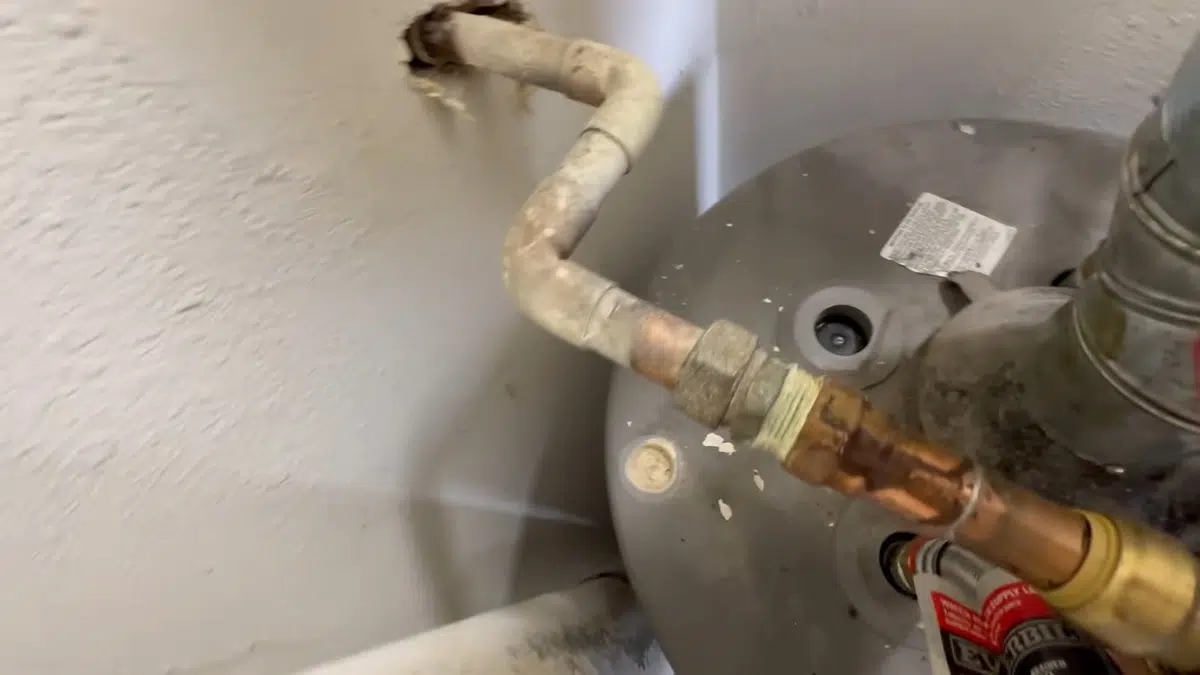
Water heater lifespan in OC vs the national average
The national manufacturer service life estimate for a standard gas tank water heater is 10 to 13 years. In Orange County, water heaters on hard water supplies (150 to 350 ppm from local utilities) consistently run toward the lower end of that range without maintenance, and frequently fail before 10 years in high-occupancy rental units where maintenance is deferred. The hard water supply is the primary reason OC water heaters underperform their rated service life: calcium and magnesium mineral deposits accumulate on the tank floor, heating element, and heat exchanger, reducing efficiency and accelerating structural failure.
Stanton is served by Golden State Water Company's West OC system, which delivers water in the 200 to 300 ppm range depending on the season and source blend. This is moderately hard water by the EPA's classification scale, and it is hard enough to produce visible scale in showerheads within 6 to 12 months of installation and to accumulate meaningful sediment in a water heater tank within the first few years of service. Without annual flushing and anode rod inspection, a water heater on Golden State Water's supply may show signs of end-of-life failure in 7 to 9 years rather than the 12 to 13 years the manufacturer expects.
Expected lifespan by water heater type in OC
Gas tank water heaters
Standard gas tank water heaters (the most common type in Stanton and central OC given SoCalGas availability) last 8 to 12 years without maintenance on OC hard water and 10 to 15 years with annual sediment flushing and anode rod inspection. The anode rod is the sacrificial magnesium or aluminum element inside the tank that corrodes preferentially to protect the tank steel. In hard water, the anode rod depletes faster than in soft water and should be inspected every 2 to 3 years. A depleted anode rod that is not replaced accelerates tank corrosion and can cut 2 to 4 years off the tank's effective life.
Electric tank water heaters
Electric tank heaters are less common in central OC but found in some older apartments and homes without gas service. The heating elements in electric heaters are particularly vulnerable to mineral scale in hard water: calcium deposits on the element surface increase its operating temperature and can cause premature burnout. Electric heaters in OC hard water may need element replacement every 5 to 8 years, and the tank itself typically lasts 10 to 15 years with element maintenance.
Tankless gas water heaters
Tankless heaters last significantly longer than tank heaters (15 to 20 or more years) but require periodic descaling in OC's hard water environment. Scale builds up inside the narrow passages of the heat exchanger, reducing heat transfer efficiency and eventually causing the unit to trigger overheat protection shutdowns. Annual or biennial descaling with a vinegar or citric acid flush circuit clears the scale and extends the exchanger's life. A tankless heater that is never descaled in OC hard water may develop heat exchanger failure in 8 to 12 years despite the product's 20-year rating.
How to extend water heater life in Stanton and central OC
Annual sediment flushing is the single most effective maintenance step for tank water heaters in OC. Flushing removes the accumulated sediment from the tank floor before it insulates the burner and stresses the tank steel. The flush involves connecting a hose to the tank drain valve, opening it with the cold supply on, and running water until it comes out clear. This takes 10 to 20 minutes and should be done once per year.
Anode rod inspection every 2 to 3 years and replacement when the rod is more than 50 percent depleted is the second most important maintenance step. A functioning anode rod protects the tank steel; a depleted rod leaves the tank unprotected. In OC hard water, rods deplete faster than in soft water areas, so the inspection interval matters.
A water softener on the supply significantly extends water heater life by eliminating the calcium and magnesium deposits that cause the sediment and scale problems. We see water heaters in Stanton homes with water softeners consistently running 12 to 15 years with normal maintenance, compared to 8 to 10 years in similar homes without softeners. For homeowners who want to reduce their long-term water heater maintenance and replacement frequency, a softener is worth considering alongside the water heater replacement itself.
Related plumbing resources
Services: Water Heater Repair, Water Heater Installation & Replacement, and Water Softener Installation
Service areas: Stanton Central, Cypress CA, and Fountain Valley CA
Related articles: Water Heater Replacement Cost in Stanton and How Golden State Water Hardness Affects Stanton Plumbing
Frequently asked questions
Standard gas tank water heaters in OC homes on hard water supplies typically last 8 to 12 years without maintenance and 10 to 15 years with annual sediment flushing. Electric tank heaters last somewhat longer on average (10 to 15 years), though the heating elements are susceptible to scale buildup in hard water. Tankless gas heaters last 15 to 20 years or more with regular descaling. The wide range reflects the effect of maintenance and water hardness on accelerating or slowing the failure modes.
Hard water contains calcium and magnesium minerals that precipitate out of solution when heated. In a gas tank water heater, this precipitation settles as sediment on the tank floor above the burner, forming an insulating layer between the burner flame and the water. The burner must run longer and at higher temperature to heat through the sediment, stressing the tank steel and accelerating failure. In an electric tank heater, the minerals plate directly onto the heating element, reducing its efficiency and eventually causing it to burn out. In a tankless heat exchanger, scale builds up inside the narrow flow channels, reducing heat transfer and eventually causing overheating or blockage.
For a gas tank heater, the first common sign is a rumbling or popping sound during the heating cycle, caused by water boiling in pockets beneath sediment on the tank floor. This sound indicates significant sediment accumulation and signals that the tank is working harder than it should. Other early signs include rust-colored or off-smell hot water, visible rust at the tank base or at the T&P valve, and inconsistent hot water temperature or recovery time that has noticeably lengthened.
A 10-year-old tank water heater in Stanton that needs a repair costing more than $250 to $350 is generally more cost-effective to replace than repair. The average replacement cost ($800 to $1,400 installed for a standard unit) buys a new 6 to 12-year service period. A repair on a 10-year-old tank in Stanton's hard water environment extends the current unit but does not address the accumulated sediment and tank wall condition that increases failure probability for each subsequent year.
Get help from a licensed Stanton plumber
Serving Stanton and central OC with same-day service and 24/7 emergency dispatch.