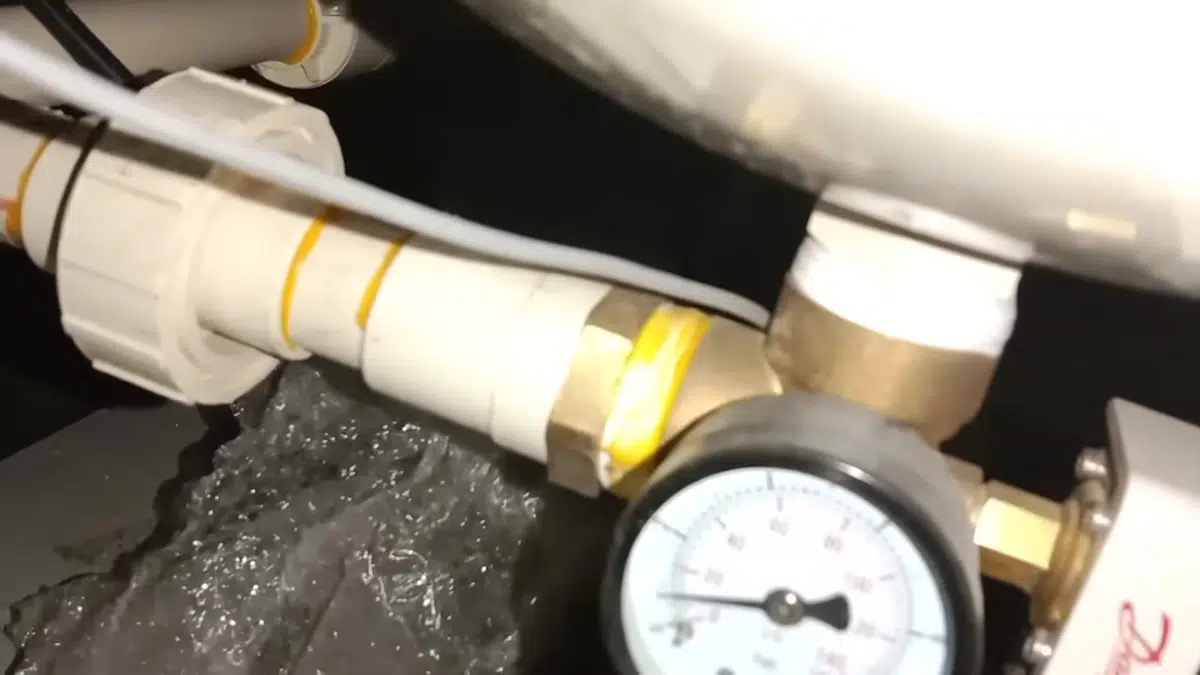
Why cast iron drain problems are common in Stanton's older housing
A large portion of Stanton's housing stock was built between the 1950s and 1980s, when cast iron was the standard material for residential and multi-family drain pipes. Cast iron is durable, but it is not indefinitely durable. After 40 to 65 years of continuous use, the interior surface of cast iron drain pipe develops rust and mineral scale that progressively narrows the pipe's interior diameter and roughens its surface. The rough interior of aged cast iron catches grease, hair, and debris much more readily than smooth PVC or ABS, which means cast iron drains in Stanton's older apartment buildings back up more frequently than equivalent drains in newer construction.
Stanton's Golden State Water West OC supply (200 to 300 ppm hardness) contributes to the cast iron problem. Calcium deposits from the hard water combine with soap residue and grease to form a harder, more adherent scale on the pipe interior than would form in soft water areas. This hard scale builds up faster than pure grease or soap deposits alone, narrowing the flow path more quickly and requiring more aggressive clearing methods to remove.
Six signs your Stanton home has developing cast iron drain problems
1. Recurring drain backups at the same fixture
A drain that backs up once and stays clear after cable clearing may have had a simple debris blockage. A drain that backs up again within 4 to 8 weeks of being cleared, or that consistently backs up at certain times of year when tree roots grow more aggressively, indicates a pipe wall condition issue rather than a one-time clog. Recurring backups at the same fixture or in the same section of pipe are the most common presenting symptom of cast iron drain deterioration in Stanton apartments.
2. Multiple fixtures backing up simultaneously
When a toilet, sink, and shower in the same bathroom all back up at once, or when a floor drain backs up while a washing machine is running, the problem is in a shared drain or stack, not in the individual fixture drain. This pattern in a Stanton apartment building typically points to the cast iron vertical stack that all those fixtures share.
3. Gurgling sounds at unused fixtures
When water flowing down one drain in a cast iron system causes air to be drawn back through adjacent fixtures, those fixtures gurgle. A toilet that bubbles when you run the kitchen sink, or a shower drain that gurgles when you flush the toilet, indicates a partial restriction in the shared drain that is pulling negative pressure back through the connected lines.
4. Slow drains throughout the property
A single slow fixture can have a localized blockage in that drain's P-trap or arm. Slow drainage at multiple fixtures across the property, particularly if the slowness has developed gradually over months rather than appearing suddenly, suggests scale accumulation narrowing the shared drain pipes.
5. Sewage odors from drain openings
Cast iron pipe with advanced interior corrosion can develop pinholes or crack at fittings, allowing sewer gas to escape into the building space. Persistent sulfur or sewage odors from drain openings that are not relieved by pouring water into the drain (to reseal the P-trap) should be investigated with camera inspection to identify whether a structural pipe failure is the source.
6. Water stains on ceilings below upper-floor drains
Water stains on the ceiling below an upper-floor bathroom or kitchen indicate a drain leak, often at a cast iron joint or at a fitting where the cast iron connects to an ABS or PVC section. These leaks may be small and intermittent, appearing only during heavy water use, and are often misidentified as roof leaks in Stanton's older apartment buildings.
Related plumbing resources
Services: Drain Cleaning & Unclogging, Hydro Jetting, and Sewer Line Repair
Service areas: Cerritos Avenue Area, Magnolia Street Area, and Stanton Central
Related articles: Drain Cleaning Cost in Stanton and Drain Cleaning vs Hydro Jetting: When to Choose
Frequently asked questions
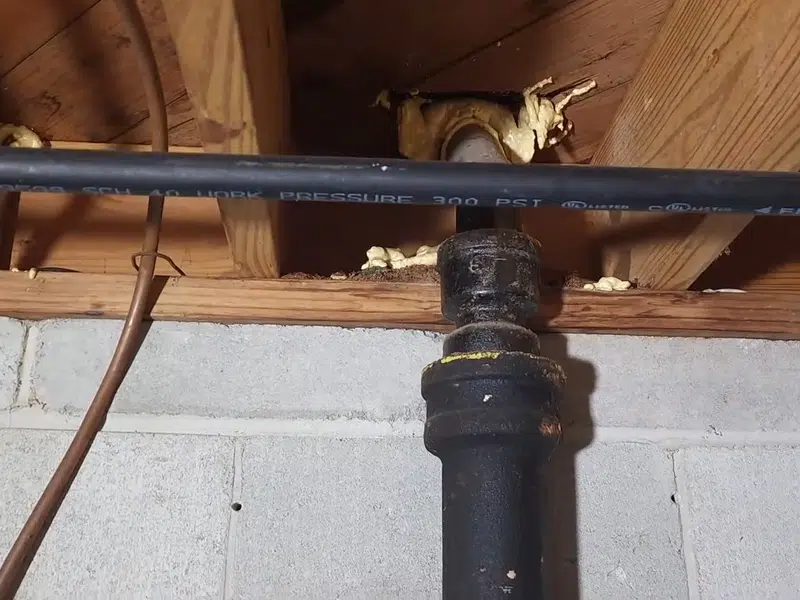
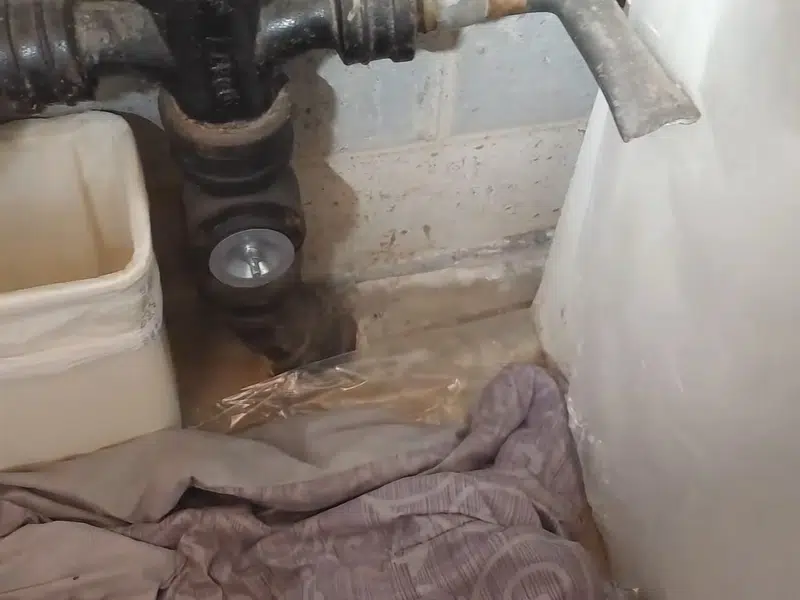
The most reliable check is visual inspection at exposed sections: under sinks (look for gray or black pipe with hub-and-spigot joints at a slight collar), in the basement or crawl space if applicable, or at the building cleanout access. Cast iron pipe is heavy, magnetic, and often shows rust-orange staining on the exterior at connections. In Stanton, homes built before 1985 very likely have cast iron in the vertical drain stacks at minimum, even if horizontal runs were replaced with ABS at some point.
Stanton's cast iron drain stock is 40 to 65 years old. At this age, the interior pipe surface has developed significant oxidation and scale. The rougher interior surface of aged cast iron catches grease, hair, and soap residue more readily than smooth PVC, so blockages form faster and require more frequent clearing. The hard Golden State Water supply also contributes: calcium deposits bind with grease and debris to create harder, more adherent scale inside cast iron pipes.
Gurgling from a sink or shower drain that you are not currently using usually means air is being drawn past a partial blockage in the shared drain or stack. When water flows through a partially obstructed cast iron stack, it pulls air from connected drain lines, creating the bubbling or gurgling sound at fixtures on the same drain branch. This is a reliable early warning sign that the stack has a developing blockage before a full backup occurs.
Most Stanton apartment buildings with active cast iron drain stacks benefit from hydro jetting every 12 to 24 months on a preventive schedule, rather than waiting for tenant backup complaints. Buildings with heavier kitchen use, such as those with gas cooking in most units, may need annual service. The interval can be calibrated after a camera inspection shows the scale accumulation rate in the specific building.
Get help from a licensed Stanton plumber
Serving Stanton and central OC with same-day service and 24/7 emergency dispatch.