Slab Leak Detection & Repair in Stanton, CA

Acoustic, thermal, and electronic detection for leaks beneath concrete foundations. Spot repair, rerouting, and epoxy lining for central OC homes.

IMAGE: Slab leak detection equipment in use, acoustic device on concrete floor

What slab leak detection and repair is, and why Stanton sees it

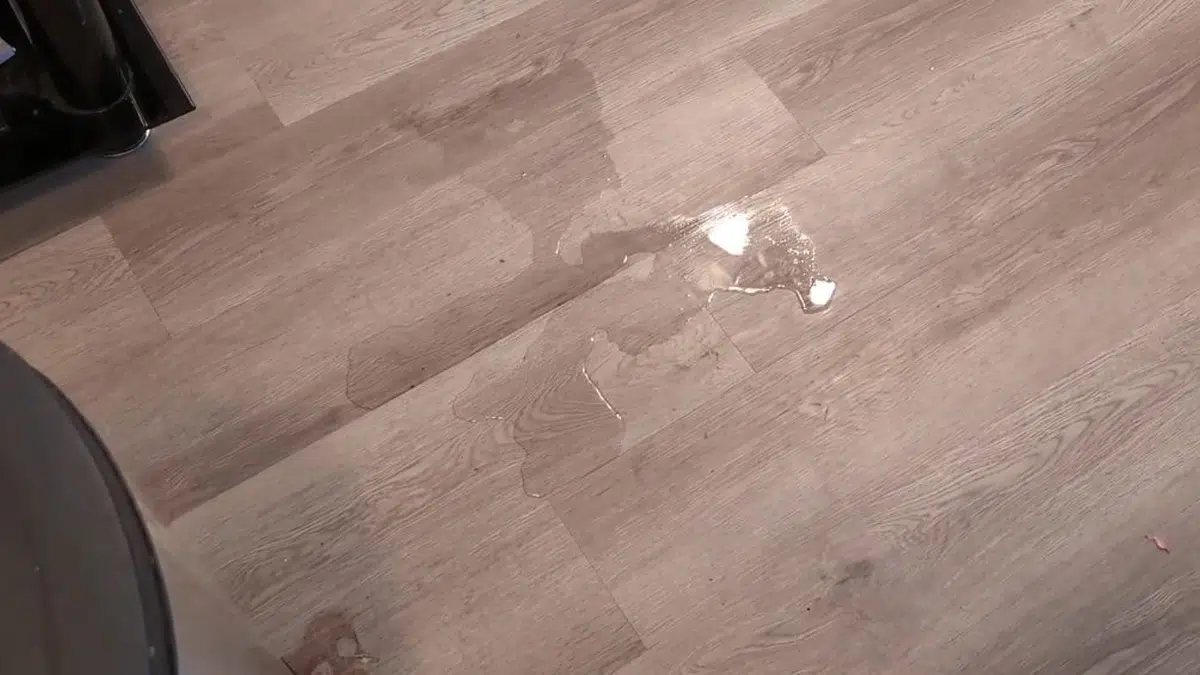
Most homes in Stanton were built on concrete slab foundations during Orange County's mid-century growth period. When the water supply lines embedded in those slabs fail (from corrosion, mineral interaction, or the slow wear of hard OC water over 50 to 60 years), the leak occurs below grade, out of sight. Water percolates through the slab or travels along the void beneath it, often surfacing far from the actual failure point.

Stanton's dense residential layout adds a specific complication. In attached units and closely spaced properties along corridors like Cerritos Avenue and the residential blocks near Stanton Central Park, a slab leak in one home often first presents as moisture on a shared wall or soft flooring in a neighbor's unit. The actual failure may be several feet away from the visible damage.

Three pipe types generate most of Stanton's slab leak calls. Original copper supply lines in 1960s and 1970s construction develop pinhole failures from mineral corrosion and pipe vibration over decades. Pre-1960 galvanized steel pipes corrode through from the outside in. And 1970s and 1980s slab construction sometimes used copper in direct contact with concrete, which accelerates the corrosion rate when the concrete chemistry is alkaline. Golden State Water Company's West Orange County system delivers moderately hard water, a blend of OC groundwater and Metropolitan Water District imports, and the mineral content accelerates corrosion from inside hot water lines where temperature cycles repeatedly stress the metal.
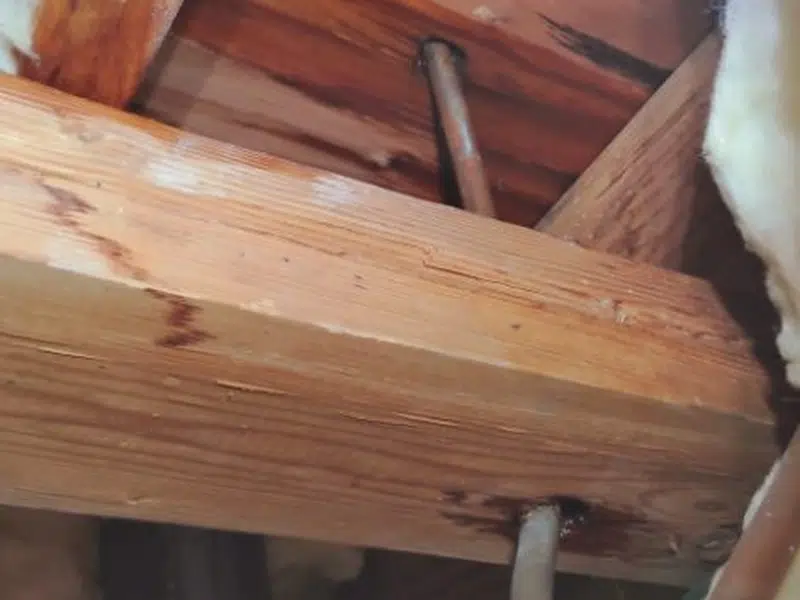
IMAGE: Thermal camera image showing warm floor spot indicating hot water slab leak

How we diagnose slab leaks

Acoustic leak detection

We use a ground microphone and amplification equipment to listen for the characteristic sound of water escaping under pressure beneath the slab. Running water in a pressurized supply line produces a distinct sound signature that carries through concrete. By mapping multiple listening points across the floor, we can triangulate the approximate leak location to within a foot or two, minimizing the area of concrete that needs to be opened for repair.

Electronic pressure testing

Before acoustic work, we perform a pressure test on both the hot and cold supply lines to isolate which line is failing and confirm the leak is under the slab rather than in the walls or ceiling. We close all fixtures and valves, apply pressure, and observe the rate of drop. This tells us whether a single-point failure or distributed pipe deterioration is more likely, and guides whether spot repair or rerouting makes more sense.

Thermal imaging

Where a hot water supply line is leaking, the heat from the escaping water often shows on the floor surface as a warm patch. We use a thermal imaging camera to map temperature variations, which frequently narrows the search area before acoustic work begins. Thermal imaging is most effective in the morning before ambient heat from the day raises the floor temperature and masks the difference. For cold water leaks, thermal imaging adds less value and we rely more heavily on acoustic methods.

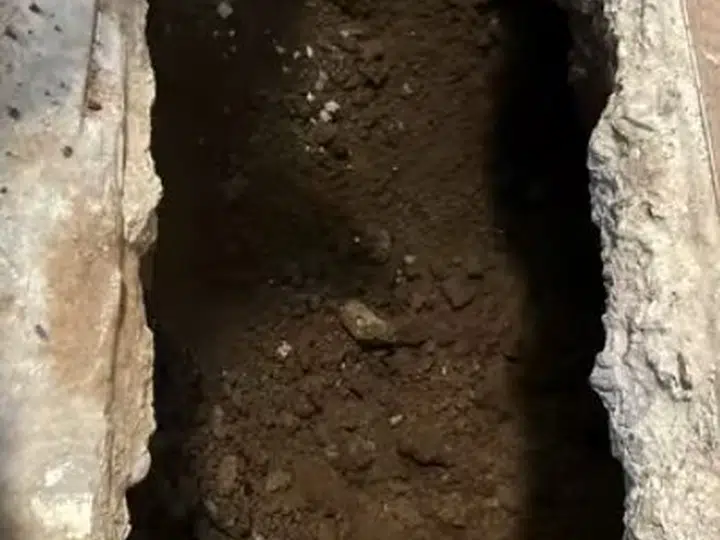
IMAGE: Concrete opened for slab leak spot repair showing failed copper pipe section

Repair methods we use

Spot repair under the slab

For a single, well-localized leak in an accessible location, we open the concrete at the smallest practical area, expose the failed section, and replace it with compatible new pipe. This is the most economical option when the leak is genuinely isolated and the surrounding pipe is in reasonable condition. After repair, the concrete opening is patched. Flooring restoration (tile, hardwood, vinyl) is typically handled as a separate scope.

Pipe rerouting above the slab

When the leak is under a tiled bathroom, expensive flooring, or an area where concrete work would cause disproportionate damage, we abandon the failed underground section and reroute new supply lines through the walls or attic. PEX tubing is flexible enough to handle most rerouting configurations and is not subject to the same corrosion mechanisms as copper or galvanized. Rerouting above the slab is also the recommended approach when a home has had multiple slab leaks, since it removes the at-risk pipe from beneath the foundation entirely.

Epoxy pipe lining

For smaller-diameter lines where the pipe structure is still intact but the interior is compromised, epoxy lining is an option. A specialized coating is applied through the existing pipe, sealing pinholes and creating a new interior surface. This is most appropriate where physical access is impractical and the damage pattern is distributed rather than localized. We assess suitability during detection; not every slab leak candidate is appropriate for lining.

Cost of slab leak detection and repair in Stanton and central OC

Typical price ranges (2026)

Detection runs $150 to $400 for acoustic and pressure testing. Spot repair under the slab runs $800 to $2,500 depending on concrete thickness, flooring type above, and pipe access. Pipe rerouting runs $1,500 to $4,000 depending on the length of the new run and how many access points are needed. Epoxy lining runs $2,000 to $4,500 for a qualifying pipe section. Full repipe (appropriate when multiple leaks indicate system-wide copper failure) runs $4,000 to $12,000 or more depending on home size and pipe configuration.

California homeowner's insurance generally covers sudden slab leaks but not leaks from gradual corrosion. Document the discovery date and take photographs before work begins. We can provide a written diagnostic summary for insurance purposes.

Other related work we handle

We also handle leak detection for failures in walls and ceilings, water line repair and replacement for main service line failures, and repiping for homes where multiple slab leaks indicate the copper supply system has reached end of life. When a slab leak triggers a full copper repipe, we cap the under-slab lines and reroute the entire supply system above grade, removing future under-slab vulnerability from the equation.

Frequently asked questions

IMAGE: Plumber reviewing slab leak detection results with homeowner

Schedule slab leak detection in Stanton

Warm floors, unexplained water bill spikes, or the sound of running water with everything off. These are worth checking. Call now for detection and we will tell you exactly what you have before any repair work begins.