Backflow Testing & Prevention in Stanton, CA

California Title 17 annual backflow preventer testing by a certified tester. Report filing with Golden State Water. Residential irrigation, commercial, and multi-family connections in central OC.

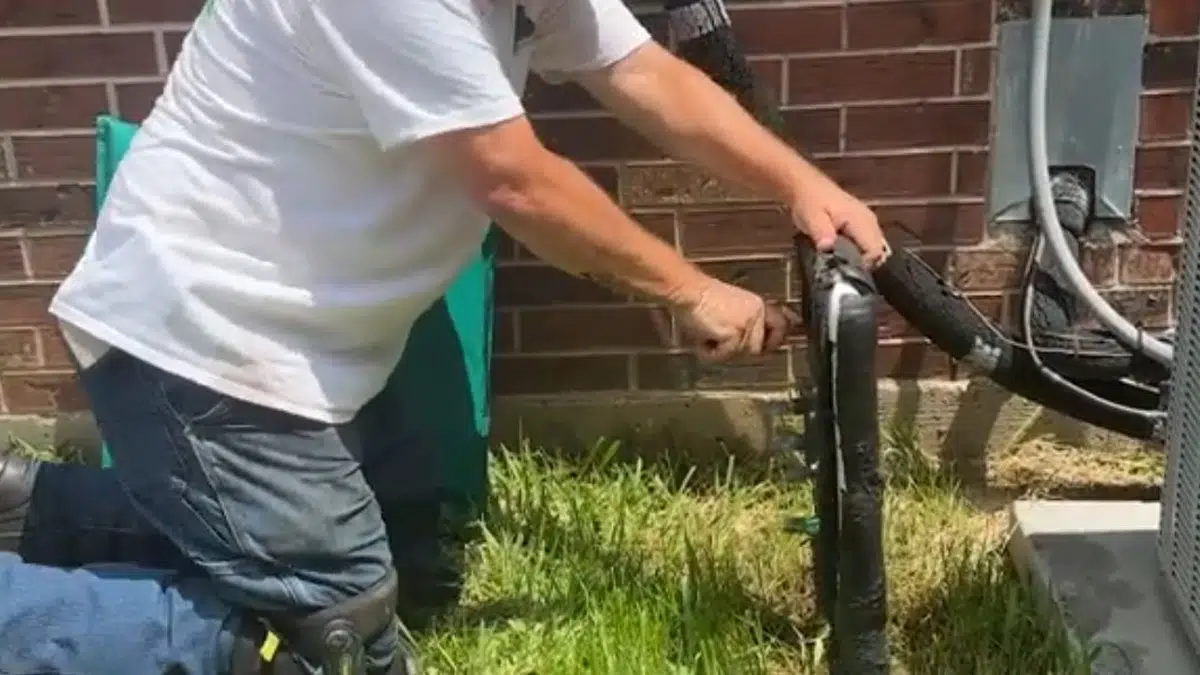
IMAGE: Certified backflow tester performing annual test on double check valve assembly in Stanton

What backflow testing and prevention is, and why it is required in Stanton

Backflow prevention assemblies protect the public potable water supply from contamination by preventing water from flowing backward through a cross-connection into the distribution system. A cross-connection is any point where a potable water supply is connected to a non-potable source — an irrigation system, a swimming pool fill line, a fire suppression system, or a commercial process water connection. When supply pressure drops (from a main break, a firefighting operation, or peak demand), water can be drawn backward through an unprotected connection and contaminate the public supply.

California Health and Safety Code Section 116800 and Title 17 of the California Code of Regulations require water suppliers, including Golden State Water Company, to implement cross-connection control programs. In Stanton's service area, this means that properties with irrigation systems, commercial and industrial connections, multi-family connections above a certain size, and fire suppression connections are required to have approved backflow prevention assemblies tested annually by a California-certified backflow prevention assembly tester (BPAT). Golden State Water sends annual testing notices to affected property owners.

The most common backflow devices in Stanton are reduced pressure zone (RPZ) assemblies on commercial and higher-hazard connections, double check valve assemblies (DCVA) on moderate-hazard residential and irrigation connections, and pressure vacuum breakers (PVB) on residential irrigation systems. The device type is determined by the level of hazard the connection represents to the water supply. Each type requires different test procedures and pass criteria.
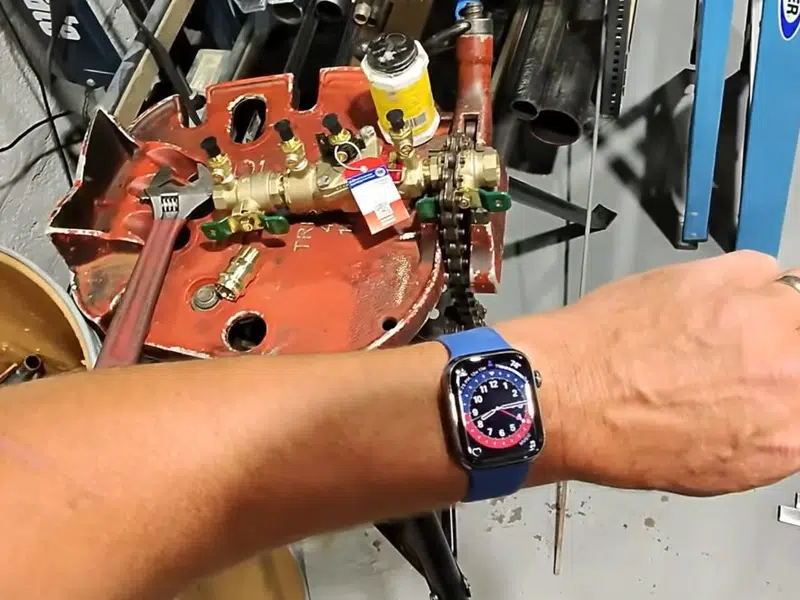
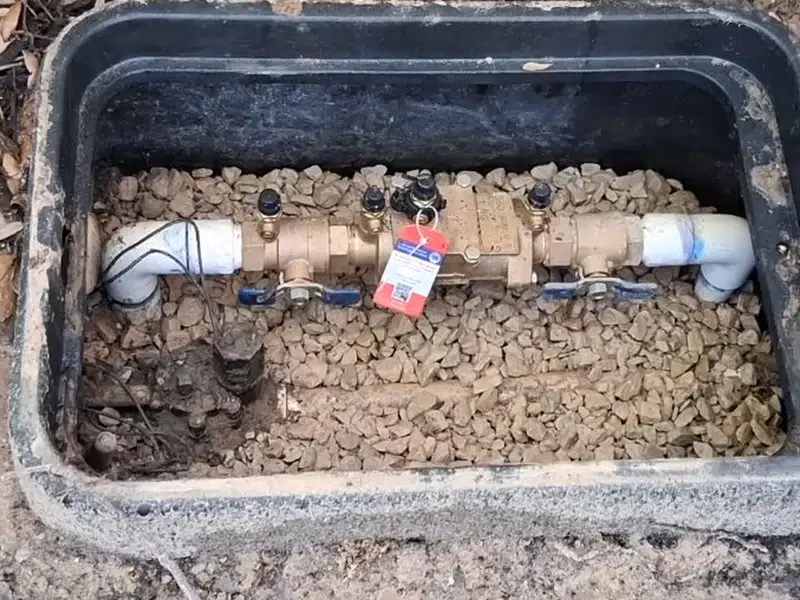
IMAGE: Backflow preventer test gauge setup showing test cocks and differential pressure readings

How we test backflow preventer assemblies

Test procedures by device type

For RPZ assemblies, we conduct the differential pressure relief valve opening point test and the check valve test using calibrated differential pressure gauges connected to the device's test cocks. For DCVA assemblies, we conduct the two-check differential pressure test. For PVB assemblies, we test the air inlet valve and the check valve. All testing follows the Foundation for Cross Connection Control and Hydraulic Research (USC-FCCCHR) published test procedures and the specific requirements of Golden State Water's cross-connection control program.

Report filing with Golden State Water

We document test results on state-approved backflow test report forms, sign them as a certified BPAT, and submit them to Golden State Water's cross-connection control department within the required reporting window. We provide a copy of the filed report to the property owner for their records. For properties that receive annual notices from Golden State Water, we include the notice reference in the filed report to confirm the compliance deadline has been met.

Failed device assessment

When a device fails the annual test, we assess whether the failure is due to worn internal components (check valve seats, diaphragms, relief valve springs) that can be repaired, or whether the device has reached end of life and needs replacement. For repairable failures, we carry common repair components for Watts, Febco, Wilkins, and Ames backflow preventers and can complete the repair on the same visit in most cases. A passing re-test occurs before the compliance report is filed.

IMAGE: New reduced pressure zone backflow preventer installed at commercial connection in Stanton

Services we provide

Annual backflow test and report

We test the backflow preventer assembly, document results on the required forms, and file the compliance report with Golden State Water. The test includes a functional check of all check valves, relief valves, and shutoffs that are part of the assembly. We confirm the installation meets current requirements for height above ground, clearance for testing and repair access, and outlet pipe configuration. The full process from test to filed report typically takes 30 to 60 minutes per device for a standard residential or small commercial assembly.

Backflow preventer repair

For devices that fail the annual test, we repair the specific failed component: seat disc, o-ring, diaphragm, relief valve seat, or check module depending on the device type and failure mode. After repair, the device is retested before the compliance report is filed with Golden State Water. We carry parts for the major manufacturers (Watts, Febco, Wilkins, Ames) and for common sizes encountered in Stanton's commercial and residential stock.

New backflow preventer installation

For connections that require a backflow preventer but do not have one, or where an old device needs full replacement, we install a new assembly approved for the connection type and hazard level. New installations must be tested immediately after installation, and the initial test report filed with Golden State Water. New installations require a plumbing permit from the City of Stanton for assemblies on service connections or where the installation modifies existing plumbing.

Cost of backflow testing and prevention in Stanton and central OC

Typical price ranges (2026)

Annual backflow test for a single residential or small commercial device: $75 to $150 including test, documentation, and Golden State Water report filing. Multiple devices on the same property: $60 to $125 per additional device when tested on the same visit. Backflow preventer repair (failed test): $150 to $400 for standard residential and light commercial devices. New backflow preventer installation: $400 to $900 for residential RPZ or DCVA, more for larger commercial assemblies. For the regulatory context on annual testing requirements, see our blog guide on California Title 17 backflow testing and our Stanton annual backflow testing requirements guide.

Other related work we handle

We also handle hose bib and outdoor faucet repair including anti-siphon valve service on residential outdoor connections, water line repair for service connection issues identified during a backflow device inspection, and commercial plumbing service for Stanton business properties that need both backflow compliance and general commercial plumbing support. For property management companies overseeing multiple Stanton properties, we can schedule batch annual testing visits to service multiple properties on the same day.

Frequently asked questions

IMAGE: Annual backflow test report form being completed by certified tester in Stanton

Schedule backflow testing in Stanton

Annual test due, Golden State Water notice received, or a failed device that needs repair and re-test. Call now for scheduling and upfront pricing for Stanton and central OC.