What California Title 17 is and what it requires
Title 17 of the California Code of Regulations establishes the statewide cross-connection control program that protects the public drinking water supply from contamination through backflow events. A cross-connection is any physical connection between a potable (drinking water) supply line and a non-potable source, such as an irrigation system, a swimming pool fill line, a fire suppression system, or a commercial process water connection. Under normal supply pressure, water flows from the potable system to the connected device. During a pressure drop (from a main break, firefighting operations, or peak demand), water can flow backward through an unprotected cross-connection and contaminate the distribution system that serves the surrounding neighborhood.
Title 17 requires California water suppliers to implement cross-connection control programs that identify hazardous connections and require approved backflow prevention assemblies on those connections. The assemblies must be tested annually by a California-certified tester (BPAT) and the test results reported to the utility. Golden State Water Company, which serves Stanton, Cypress, Los Alamitos, La Palma, Seal Beach, and parts of neighboring cities, implements its cross-connection control program under this requirement.
Which properties need annual backflow testing under Title 17
The specific connections that require annual testing are determined by the hazard level the connection presents to the potable supply. In Golden State Water's West OC service area, connections that typically require annual testing certification include: commercial and industrial service connections of any type; irrigation systems with chemical injection capability (fertilizer or pesticide injectors); fire suppression systems connected to the potable supply; multi-family residential buildings above a certain unit count; swimming pool and spa fill connections in some configurations; and any connection where the utility has determined a specific cross-connection hazard exists.
Residential hose bibs (outdoor faucets) require an anti-siphon device under California Plumbing Code but are not typically subject to annual testing certification. The anti-siphon device on a residential hose bib provides protection adequate for the hazard level at that connection without requiring certified annual testing.
Types of backflow preventer assemblies and which is required where
Reduced pressure zone (RPZ) assembly
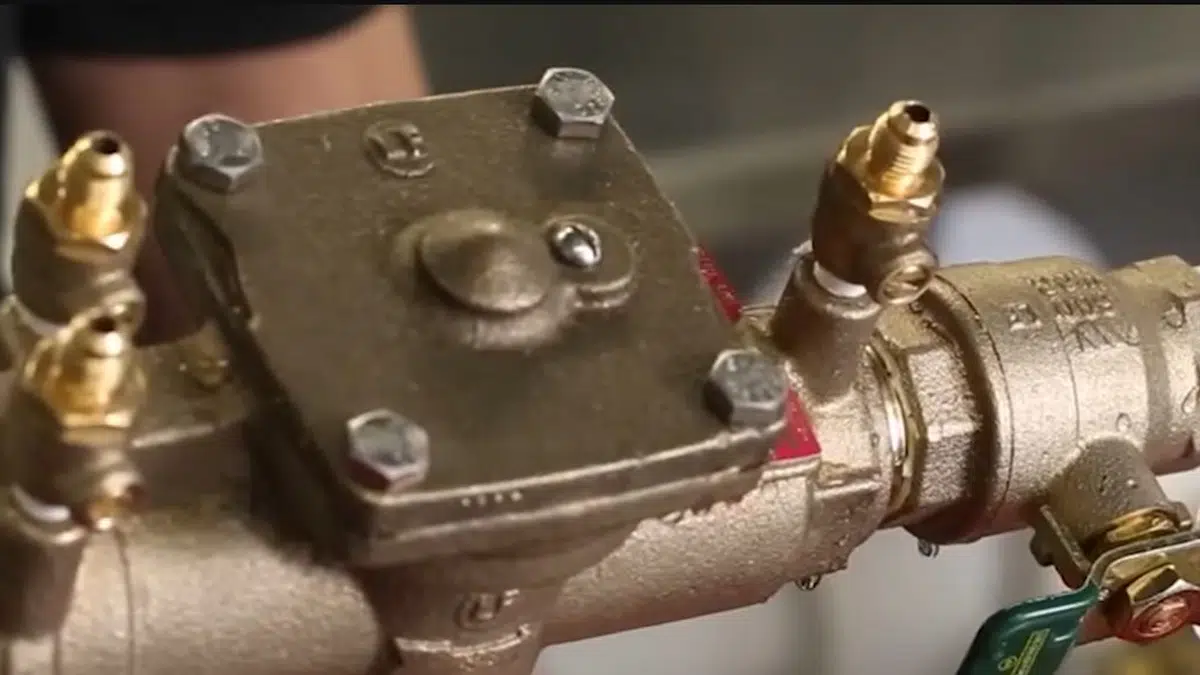
The RPZ is required for connections where a significant contamination hazard exists if backflow occurs, including connections to chemical injection systems, industrial process connections, and some commercial connections. The RPZ has two independently operating check valves and a pressure differential relief valve that opens to atmosphere if either check valve fails, providing a physical break in the line. RPZ assemblies are the most protective device type and are required where the consequence of a backflow event is most serious.
Double check valve assembly (DCVA)
The DCVA has two independently operating check valves without a relief valve and is appropriate for moderate-hazard connections such as standard commercial service connections and irrigation systems without chemical injection. DCVA assemblies are more common in commercial settings where the hazard does not rise to RPZ level.
Pressure vacuum breaker (PVB)
PVBs are used on irrigation systems and similar connections where the device is installed above the highest downstream outlet. The PVB allows air to enter the line when pressure drops, breaking the siphon connection. PVBs must be installed at a specific height above the highest irrigation head to function properly and cannot be used in locations where they might be submerged.
The annual testing process and documentation
Annual backflow testing involves a certified tester connecting calibrated differential pressure gauges to the test cocks on the backflow preventer assembly and performing the specific test procedures prescribed by the Foundation for Cross-Connection Control and Hydraulic Research (USC-FCCCHR). The test verifies that each check valve and relief valve (on RPZ assemblies) is functioning within the pressure differential tolerances required for the device type. The complete test typically takes 20 to 45 minutes per device for a standard residential or small commercial assembly.
After the test, the certified tester completes the required reporting forms, signs them with their BPAT certification number, and submits them to the water utility within the reporting window specified by the utility's program. We provide a copy of the filed report to the property owner as documentation of compliance. For properties that receive annual testing notices from Golden State Water, we reference the notice in the filed report to confirm the specific compliance deadline was met.
Related plumbing resources
Services: Backflow Testing & Prevention, Commercial Plumbing, and Hose Bib & Outdoor Faucet Repair
Service areas: Beach Boulevard Corridor, Downtown Stanton, and Anaheim CA
Related articles: Annual Backflow Testing Requirements in Stanton and Landlord Plumbing Responsibilities in Stanton

Frequently asked questions
Title 17 of the California Code of Regulations, Section 7583 through 7605, establishes the cross-connection control program requirements for California water suppliers. The regulation requires water utilities to identify service connections that pose a potential hazard to the potable water distribution system and to require those connections to have approved backflow prevention assemblies tested annually by a certified tester. The public health rationale is that a backflow event at an unprotected connection can contaminate the drinking water supply for an entire neighborhood.
If your water utility has sent you a notice indicating that your connection requires annual backflow testing, that notice identifies the required device type and the compliance deadline. For connections that have not received a notice but involve irrigation systems, commercial use, fire suppression, or multi-family buildings above a certain size, it is worth contacting your utility's cross-connection control department to confirm your testing status. We can also assess your connection configuration and confirm whether a backflow preventer is required and what type.
Failure to comply with a utility's cross-connection control program requirements can result in service interruption: the utility is authorized to shut off water service to a non-compliant connection until the required testing is completed and passed. For commercial properties that cannot operate without water, service interruption is a significant operational risk. Completing the annual test before the deadline in the utility's notice is always less disruptive than responding to a service shutoff notice.
No. California requires that backflow prevention assemblies subject to annual testing be tested by a certified backflow prevention assembly tester (BPAT). BPAT certification requires completion of a training program and passage of an examination administered by a state-recognized certifying organization. We hold current BPAT certification for the devices and service areas we work in, including Golden State Water's West OC coverage area that includes Stanton, Cypress, Los Alamitos, and adjacent cities.
Get help from a licensed Stanton plumber
Serving Stanton and central OC with same-day service and 24/7 emergency dispatch.