What water filtration is, and how it differs from water softening in Stanton
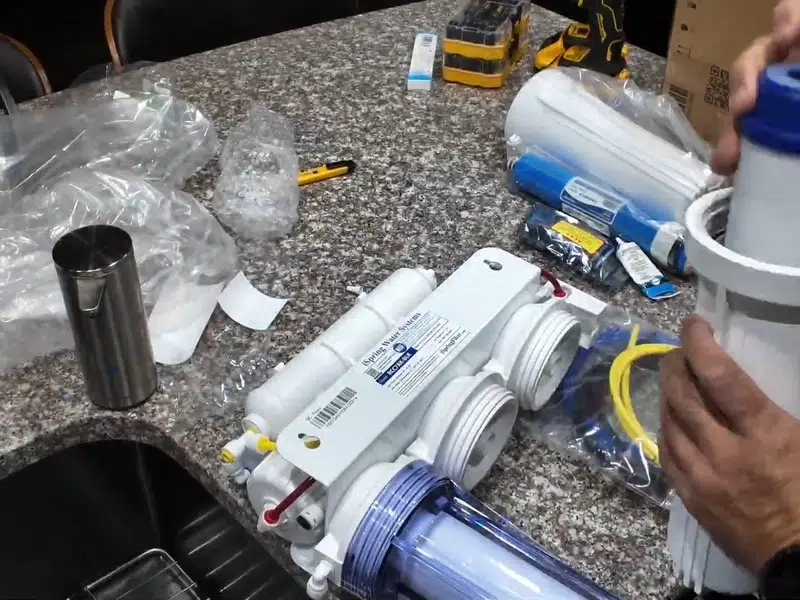
Water filtration uses physical or chemical media to remove specific contaminants from drinking water. A sediment filter traps suspended particles. A carbon filter adsorbs chlorine, chloramines, volatile organic compounds, and taste and odor compounds. A reverse osmosis (RO) membrane forces water under pressure through a semi-permeable barrier that rejects dissolved solids, heavy metals, nitrates, fluoride, and a broad range of other contaminants, producing water of very high purity at the point of use. These are different processes from water softening, which removes hardness minerals through ion exchange but does not significantly address other contaminant types.
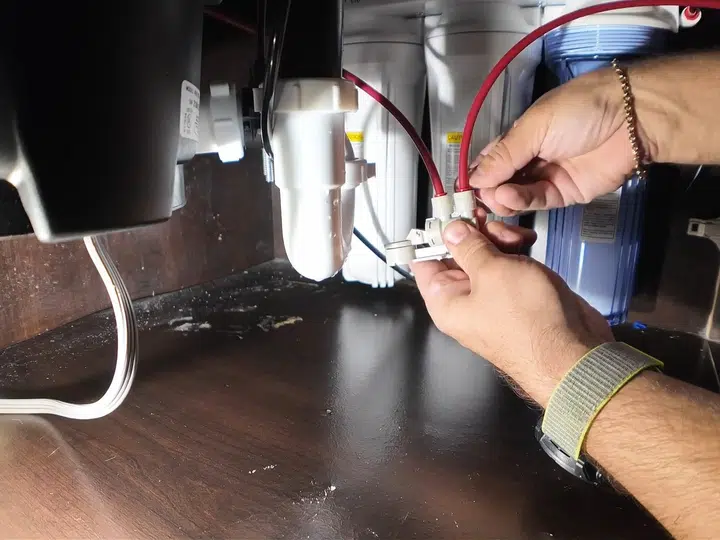
Golden State Water Company's West OC supply is treated to meet all applicable EPA and California drinking water standards. Filtration in Stanton is typically a preference and quality-enhancement decision rather than a safety necessity. The utility's treatment process uses chlorination, which affects taste and odor. The moderately hard supply (200 to 300 ppm) affects the taste of water and the scaling of appliances, which softening addresses differently from filtration. Many Stanton households that want both taste improvement and scale reduction use a whole-house softener for the scale problem and an under-sink RO system for drinking water at the kitchen tap.